

Cyprus – The Jewel of the Mediterranean
Cyprus has long been celebrated as one of the Mediterranean’s most captivating destinations, admired not only for its beauty but also for its exceptional quality of life.
Often referred to as the “Jewel of the Mediterranean,” the island seamlessly combines rich history, timeless charm, and modern comfort.
Its vibrant culture, authentic cuisine, and warm hospitality continue to attract visitors, investors, and residents from around the world — many of whom choose to make Cyprus their permanent home.
Climate & Natural Habitat
Blessed with one of the warmest climates in the Mediterranean, Cyprus enjoys an average of 320 days of sunshine each year, making it a true year-round destination.
From June to September, temperatures can reach up to 40°C, while even in the cooler months of December to February, the weather remains pleasantly mild, averaging around 16°C.
The island’s 640-kilometre coastline is a masterpiece of natural beauty, dotted with 66 Blue Flag beaches — an international recognition of clean, safe, and crystal-clear waters.
Many of these award-winning beaches are located on the eastern coast, in Ayia Napa and Protaras, giving Cyprus one of the highest ratios of Blue Flag beaches per capita in the world.
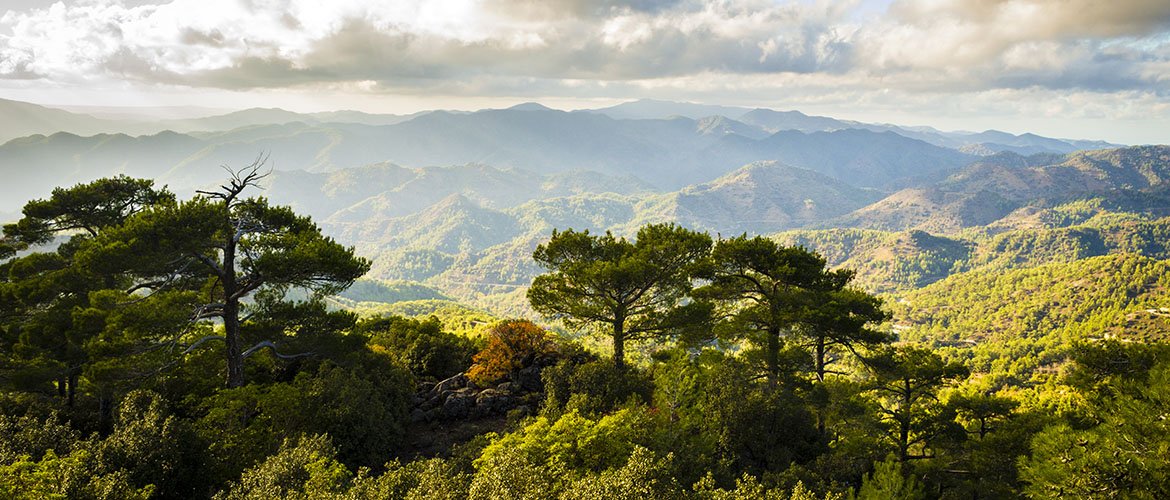
Moving inland, the landscape transforms into the Troodos Mountains, rising majestically to 1,951 meters at Mount Olympus.
This region offers a completely different experience — lush pine forests, charming stone-built villages, ancient monasteries, and scenic nature trails that reflect the island’s cultural and spiritual heritage.
During winter, Troodos becomes a small alpine retreat, where visitors can even ski or snowboard before returning to the coast for a sunny afternoon — a rare luxury that few destinations can offer.

Culture & Cuisine
First impressions matter — and in Cyprus, they never disappoint.
Visitors are instantly captivated by the island’s warm, genuine hospitality, a hallmark of Cypriot life that keeps many returning year after year.
The locals’ friendliness and open-hearted nature are matched only by their passion for food, family, and celebration, which together form the foundation of the island’s rich culture.
Cypriot cuisine is a delectable blend of Greek and Middle Eastern influences, offering a diverse range of fresh, flavorful dishes prepared with love and tradition.
Across the island, a multitude of restaurants and tavernas invite diners to indulge in meze-style feasts, featuring an array of small plates — from grilled halloumi and olives to slow-cooked lamb, fresh seafood, and vibrant salads.
Each meal reflects the island’s connection to the land and sea, enjoyed best with a glass of local wine and the company of friends.
Beyond its world-famous beaches, Cyprus offers a dynamic cultural scene with music festivals, art exhibitions, wine celebrations, and open-air concerts throughout the year.
The main cities and resorts also provide a wealth of entertainment and leisure options — from shopping malls and waterparks to cinemas, cafés, and family attractions — ensuring there is something for everyone to enjoy.
Religion plays an important role in daily life, with the majority of Cypriots following the Greek Orthodox faith.
Across the island, countless churches and monasteries reflect centuries of devotion and artistry, their domes and icons integral to the island’s landscape.
Ten of these sacred sites are inscribed on the UNESCO World Heritage List, celebrated for their Byzantine architecture and spiritual grandeur — a testament to Cyprus’s enduring cultural and religious heritage.
Safety & Healthcare
Cyprus consistently ranks among the safest countries in Europe, boasting one of the lowest crime rates in the EU.
This reputation for security, stability, and peace of mind has long been a major attraction for families, retirees, and foreign investors seeking a safe and welcoming environment.
Few destinations can match Cyprus’s combination of personal safety and community well-being, making it an ideal location for both holidays and permanent residence.
The island also earned international recognition for its effective and well-coordinated response to the COVID-19 pandemic, praised for its preparedness, medical infrastructure, and public health management.
Cyprus offers a high standard of healthcare, available through both public and private systems across all major towns and cities.
In 2019, the country launched GeSY, a universal national health system providing affordable, comprehensive medical care for all residents.
The system is funded jointly by the state and patient contributions, and members can freely select their own general practitioners and specialists from both public and private sectors.
All legal and permanent residents are eligible to register for GeSY.
Private healthcare in Cyprus is equally impressive, known for high-quality service, advanced facilities, and affordability.
The island is home to more than 100 private healthcare establishments, including hospitals, clinics, diagnostic centers, and private practices, attracting not only residents but also medical tourists seeking excellent care at competitive prices.
Language & Education
Modern Greek is the official language of Cyprus, spoken alongside the distinct Cypriot dialect, but English is widely used in everyday life, business, and education — a significant advantage for international residents and visitors.
Many Cypriots are fluent in English, and government services, road signs, and business operations are easily accessible to English speakers.
Education in Cyprus is of an exceptionally high standard, ranking among the best in Europe.
The country holds the highest percentage of university graduates per capita in the EU, reflecting its strong commitment to education and lifelong learning.
Schooling is divided into pre-primary, primary, secondary, and higher education, and is free and compulsory for children aged 5 to 15 in the public system.
Private education is also widely available, with international schools offering instruction in English, Russian, and other languages, following British or American curricula.
At the university level, Cyprus has evolved into a regional hub for higher education, with the number of foreign students rising from 8,000 to nearly 30,000 over the past decade.
The education sector now accounts for approximately 7% of the nation’s GDP, underscoring its growing international influence.
There are six private universities, three public universities, and nearly 50 accredited higher education institutions, offering a wide range of academic and technical disciplines — all recognized by the Ministry of Education, Culture, Sports and Youth.